


Choosing Your Wedding Music
According to the eminent composer, Ludwig Van Beethoven, music is the mediator between the spiritual and the sensual life. Memories are deeply tied to all of our senses and important occasions are remembered fondly whenever a familiar tune is heard. However, most couples have little experience of classical music and it can be a difficult task to choose the style of group, never mind the actual pieces played. When choosing your wedding music, recordings can be lovely but there is nothing quite like a live performance to add a touch of class. Here are some ideas to help you find your wedding music and entertainment.
Music is generally chosen to be played as the bride enters, at the signing of the register and as the newlyweds depart. It is often a wise idea to consider the length of the ceremony without music to guide you towards your choice. The main proceedings are surprisingly short until music and readings are added.
If you have chosen to have a church ceremony there are usually traditional options available, although most vicars will be prepared to be flexible assuming that the chosen style is not contrary to the church’s philosophy. Your vicar will inform you about additional costs for an organist or a choir at your meeting. Many people find they cannot remember hymns beyond Kumbaya my Lord from their school days, so the Church of England provides a comprehensive list of suggestions on their Ceremony Planner on www.yourchurchwedding.org. There may also be the possibility of the church bells being rung before and after your ceremony, a tradition which gives a truly celebratory feel to the day.
The only rule with civil ceremonies is as with the readings: there must be no religious element. This should not restrict you in your decision, however, as there are a huge number of beautiful pieces written for formal occasions. It is always worth considering the location of your ceremony and how the atmosphere will be complemented by your chosen style. For example, a brass quartet or fanfare group would particularly suit a castle or medieval building, whereas a steel band would suit a less formal, outdoor-sy summer affair.
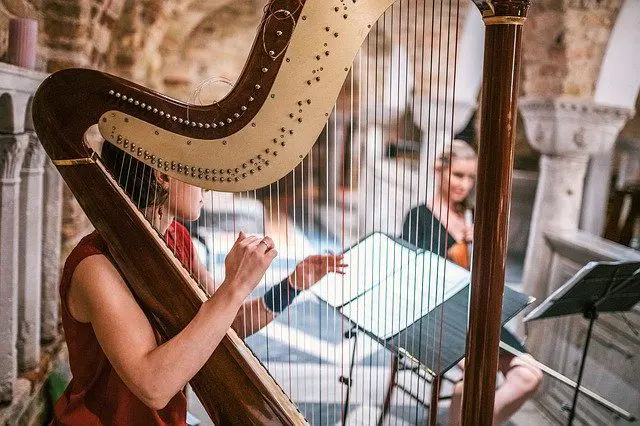
Ultimately, your choice of performer is up to you and there are many different configurations of musicians that you could choose: harpists, flautists, singers, pianists, trumpeters, string quartets, wind quintets, brass quartets/quintets, rock bands, guitarists, organists, folk groups, steel bands and many more. Performers will be able to recommend pieces that they think work well and most will usually have a standard playlist. However, it may be possible to request a special arrangement for an extra fee. This would be a question to ask at the first enquiry. If you happen to be short of ideas, why not have a browse on www.classicfm.com
Click here to download your FREE wedding planning pack
